
Topics in this issue of Behind the Blue:
- From the Chair: Make a Difference in the USHBC
- New Webinar Series Provides Practical Insights into Ag Trade
- USHBC Awarded $700,000+ in TASC Grants
- USHBC Showcases USA Blueberries at Asia Fruit Logistica
- New Study Suggests Introducing Blueberries as One of Infants’ First Foods May Support Gut Health, Immune Development
- South Africa Grants Access for U.S. Fresh Blueberries
- Houtby Promoted to Sr. Director of Government Affairs, Public Policy
- There’s Still Time to Register for The Blueberry Convention, Oct. 8-10
- Apply to be a USHBC Volunteer by Oct. 13
From the Chair: Make a Difference in the USHBC

By Bryan Sakuma
USHBC Chair
The USHBC has come a long way, but to truly unlock our potential, we need to embrace the next era – an era of bold ideas, strategic collaboration and forward-thinking innovation.
You can be part of this movement by applying to volunteer on a USHBC committee, task force or subcommittee. These groups play a critical role in guiding our work in areas like promotion, health research, innovation and industry engagement. Your insight and expertise will help shape the decisions that move the blueberry industry forward.
Whether you’re a grower, marketer, researcher or supply chain partner, there’s a place for you to make a difference. We encourage you to learn more below and apply for a position by the October 13 deadline.
New Webinar Series Provides Practical Insights into Ag Trade
USHBC and the North American Blueberry Council (NABC), in partnership with the Ag Trade Education Council (ATEC), invites you to join the Trade 101 webinar series – a four-part series designed to deepen your understanding of U.S. trade policy and its impact on agriculture, particularly the blueberry industry.
Each one-hour workshop will advance your knowledge on trade policy history, recent trade developments, and blueberry imports and exports. You’ll walk away from the series with a broad understanding of U.S. trade policy over time and practical insights into how trade directly affects the blueberry industry.
Part 1 (Sept. 29): Explore why trade matters to U.S. agriculture and trace the history of trade law and policy from the nation’s founding through 2015.
Part 2 (Oct. 14): Examine key developments in U.S. trade during different administrations, with a focus on policy shifts and priorities.
Part 3 (Nov. 13): Review the latest trade developments of 2025, including tariffs, trade agreements and legal challenges to presidential authority.
Part 4 (Dec. 9): Take a deep dive into how global trade has changed the U.S. blueberry industry, looking at the history, legal challenges and current landscape of blueberry imports and exports.
Learn more and register today.
USHBC Awarded $700,000+ in TASC Grants
USHBC has been awarded $723,653 through the USDA’s Technical Assistance for Specialty Crops (TASC) program.
The funding is provided through USDA’s Foreign Agricultural Service (FAS), and is designed to help U.S. specialty crop producers combat trade barriers, as well as promote and sell their goods internationally.
USHBC will use the funding to support two projects:
- Establishing residue decline curves for priority chemicals, focusing on those with the highest potential for Maximum Residue Limits (MRL), particularly those with the highest potential for MRL violations due to a lack of established MRL in a targeted country or an MRL lower than the U.S. tolerance ($447,853).
- Generating data to reestablish an acceptable Japanese MRL and Codex MRL for iprodione ($275,800).
Since 2016, USHBC has been awarded nearly $3.36 million in TASC funding to assist blueberry exporters.
Through TASC and similar programs, USDA partners with nonprofit U.S. agricultural trade associations, farmer cooperatives, nonprofit state-regional trade groups, state agencies and small businesses to expand market access and conduct overseas marketing and promotional activities on behalf of U.S. agricultural producers and processors.
USDA market development programs return an estimated $24.50 for every dollar invested.
The TASC program makes $9 million available annually to fund projects that address sanitary, phytosanitary and technical barriers that prohibit or threaten the export of U.S. specialty crops.
The full list of FY2025 recipients and details about the program is available here.
USHBC Showcases USA Blueberries at Asia Fruit Logistica

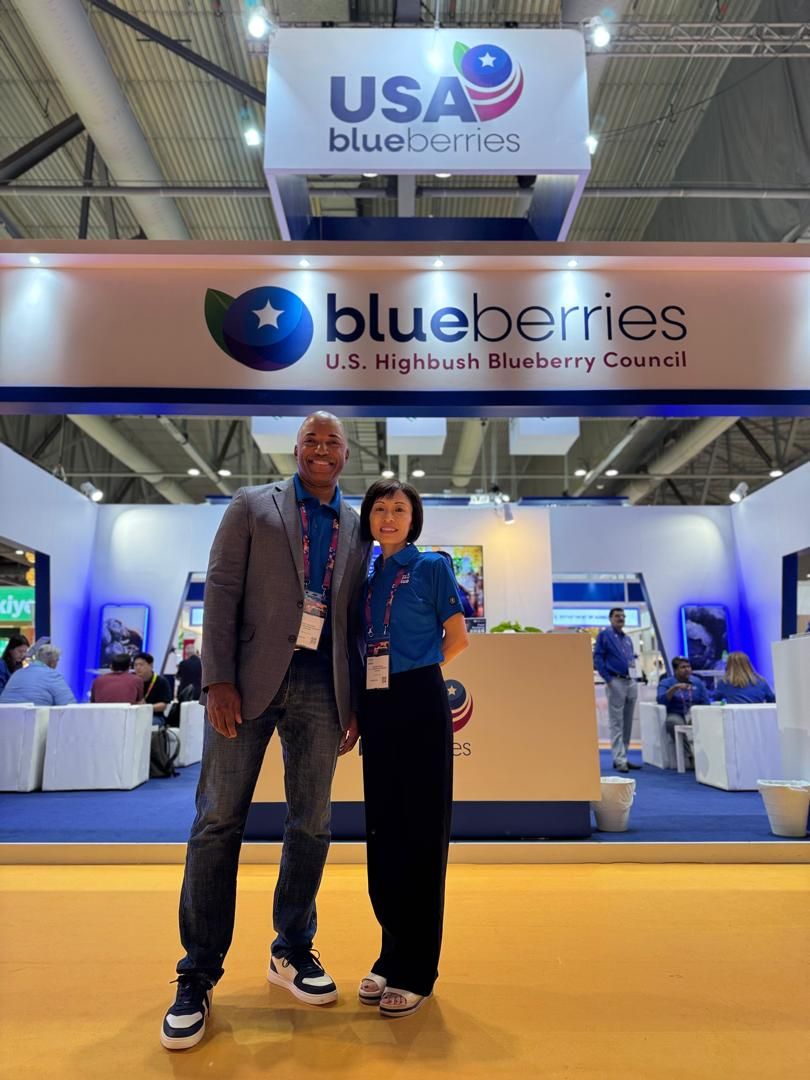
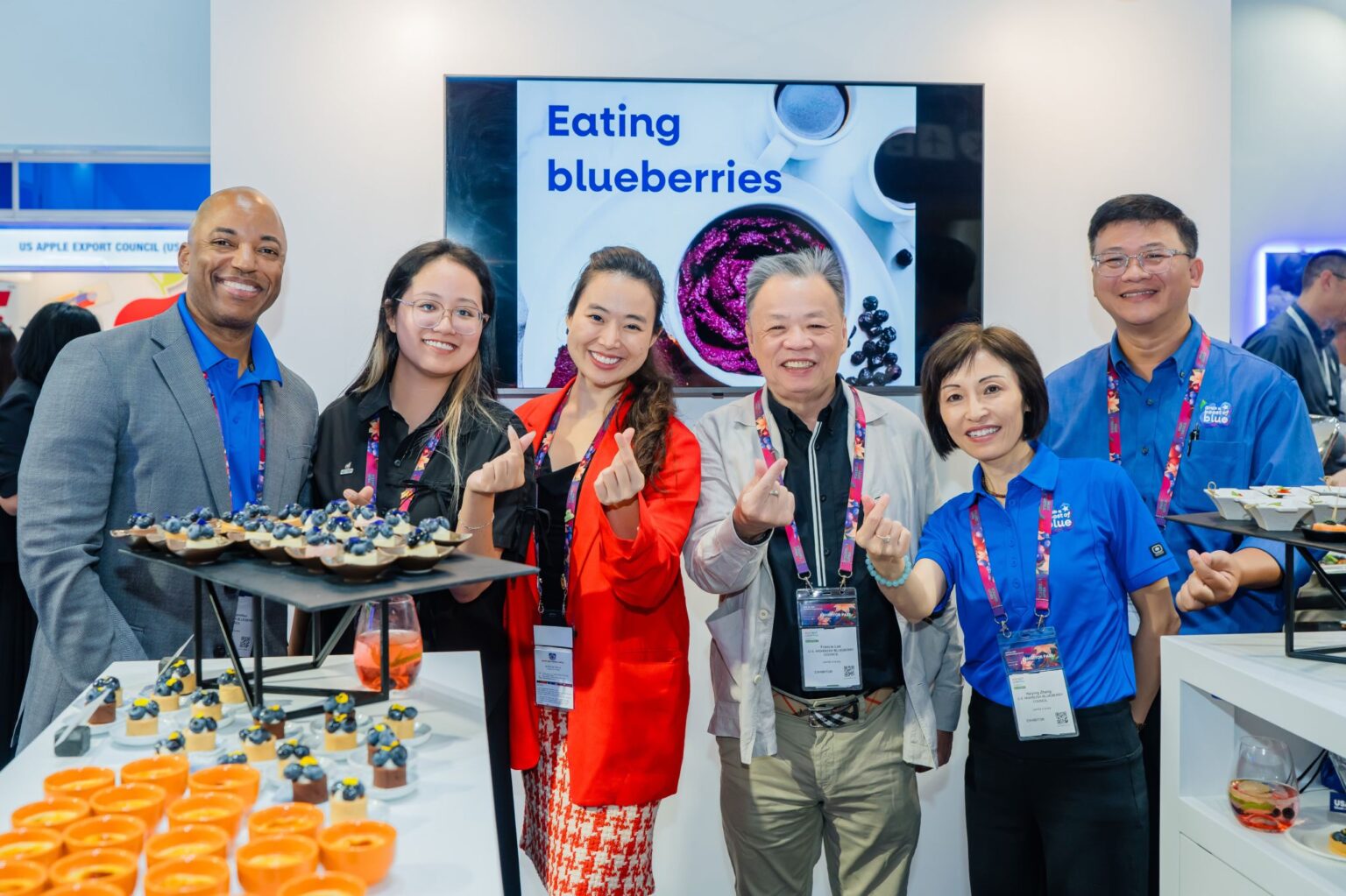
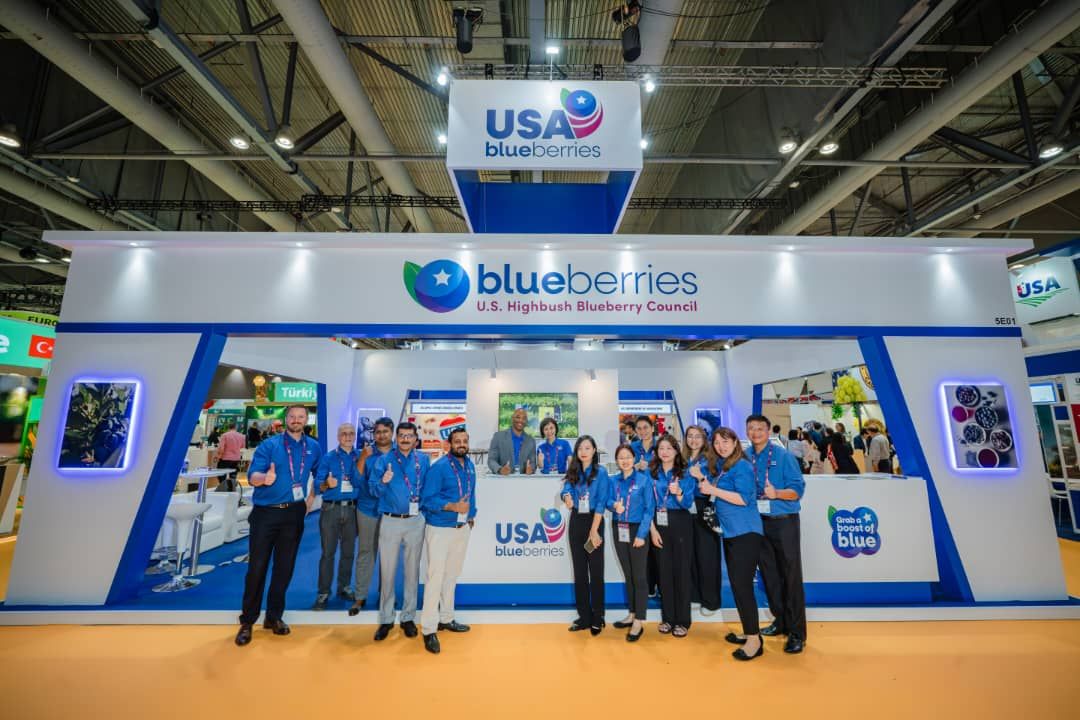
The USHBC had a highly successful showing at Asia Fruit Logistica (AFL), Sept. 3-5 at AsiaWorld-Expo in Hong Kong.
AFL brings together the entire value chain to spotlight the latest innovations and opportunities shaping the industry. For USHBC, it was a powerful stage to expand international business, connect with top-tier buyers and gain critical market insights across Asia and beyond.
Our focus at AFL was clear: Build new partnerships and highlight the quality and versatility of U.S. blueberries. With the support of our in-market representatives from China, South Korea, Japan, the Philippines, India, Malaysia and Vietnam, USHBC facilitated more than 80 business meetings between U.S. exporters and key importers, retailers and trade partners.
Attendees also had the chance to sample delicious dishes made with USA blueberries, sparking inspiration for new product applications and retail promotions. On September 4, USHBC hosted a networking reception attended by nearly 90 partners from around the world – a moment to celebrate our shared successes and express appreciation for the friendship, collaboration and continued support of the global blueberry industry.
Events like AFL not only drive immediate business opportunities, but also play a vital role in strengthening relationships and fostering the long-term partnerships that are essential to growing global demand for blueberries.
New Study Suggests Introducing Blueberries as One of Infants’ First Foods May Support Gut Health, Immune Development
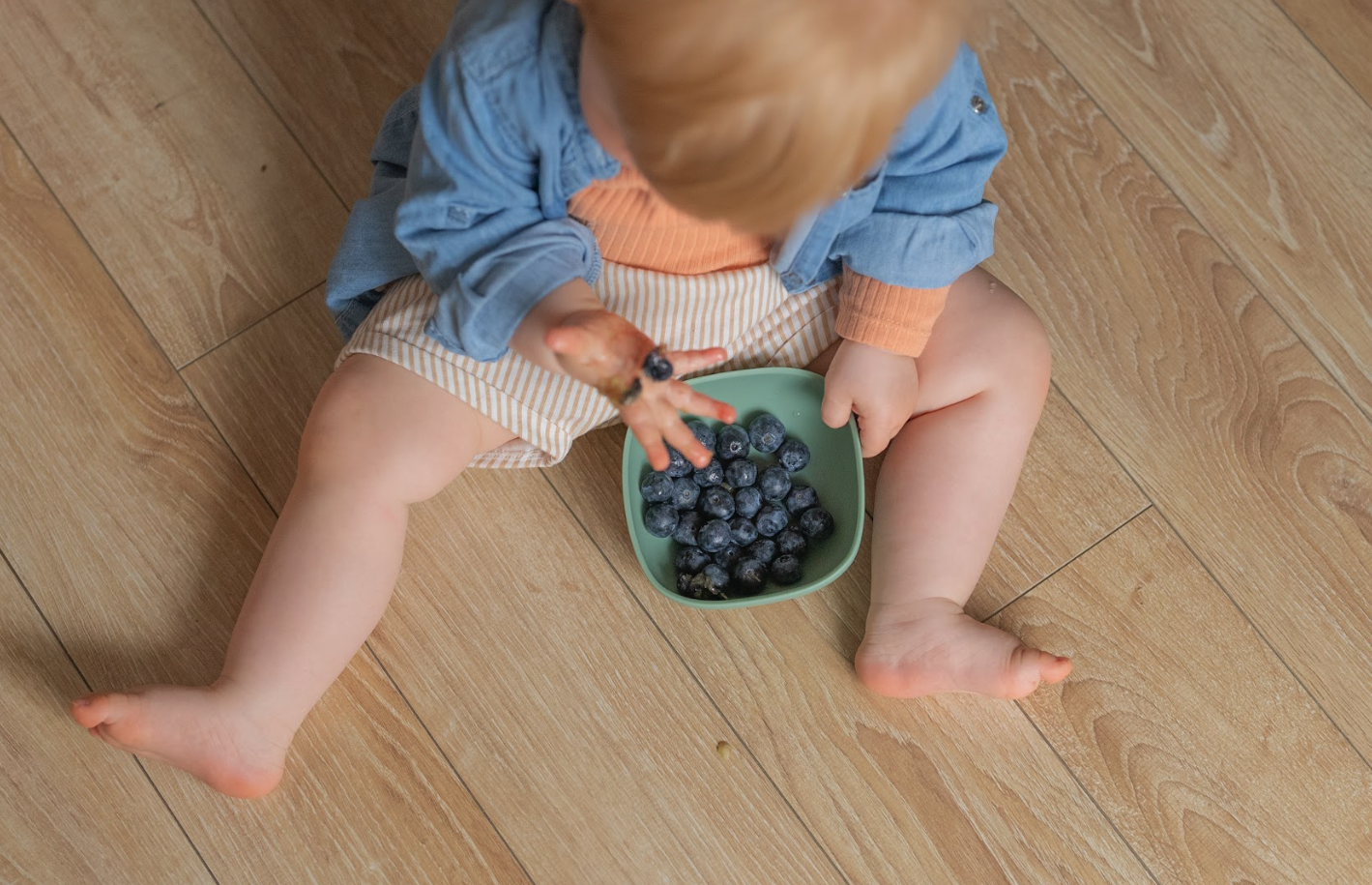
A new randomized controlled trial, published in Nutrients and Frontiers in Nutrition, suggests that introducing blueberries during the complementary feeding period, or the introduction of solid foods, may support infants’ development of beneficial gut microbiota, modulate immune development and influence resolution of allergy-related symptoms.
Complementary feeding is a critical period for establishing healthy gut bacteria and immune development, and shaping infants’ diets. Current recommendations encourage a variety of foods from all food groups, starting at around 6 months of age.1
The trial examined different outcomes resulting from the same intervention, conducted at the University of Colorado Anschutz Medical Campus. Sixty-one human milk-fed infants received daily supplementation of 10 g of freeze-dried blueberry powder (equivalent to 2 ounces of fresh blueberries, or approximately 5 servings of fruit for infants) or a placebo powder from 5-12 months of age. Caregivers were recommended to prepare the powder by mixing it into infant purees or breastmilk.
The study by Glime et. al looked at how incorporating blueberry powder impacted babies’ gut microbiota. As expected with aging and introduction of complementary feeding, the infants tended to have more diverse gut bacteria over time. However, those consuming blueberries tended to have a greater diversity compared to the placebo group, more potentially beneficial bacteria, and less bacteria linked to illnesses and allergies2. This research suggests that blueberries as one of babies’ first foods may support the establishment of more diverse and beneficial gut bacteria.
The study by Venter et. al assessed whether blueberries affect infants’ allergy symptoms and immune markers. Infants consuming blueberry powder during complementary feeding had improved allergy symptoms and fewer new allergy symptoms compared with those who had a placebo powder. These effects may be linked to improved immune biomarkers, including lower levels of a pro-inflammatory cytokine that promotes allergy development, and higher levels of an anti-inflammatory cytokine that reduces allergic inflammation. Although changes in allergy symptoms were not significantly associated with the cytokines examined in the study, microbiota analyses revealed correlations between cytokine levels and specific bacteria species.
Overall, the authors concluded that early blueberry powder intake may help reduce allergy symptoms and support immune development, while identifying promising microbial targets for further research.
“These findings suggest that introducing blueberries, in freeze-died powder form, during complementary feeding may potentially provide infants meaningful benefits in shaping a healthier gut and immune system,” said Minghua Tang, Ph.D., the principal investigator of this study, “underscoring the potential of simple, nutrient-rich foods like blueberries to support children’s health from infancy.”
Study limitations include its relatively small sample size, lack of follow-up, and lack of use of whole, fresh blueberries to prevent risk of infant choking. Long-term research is warranted to understand the long-term health effects on individuals’ gut microbiome and immune system into childhood and adulthood.
These studies indicate that blueberry powder consumption may benefit infants’ developing gut microbiota and immune systems, and provide information to potentially inform considerations for recommending complementary food choices beyond just meeting nutrient needs of growing infants.
South Africa Grants Access for U.S. Fresh Blueberries
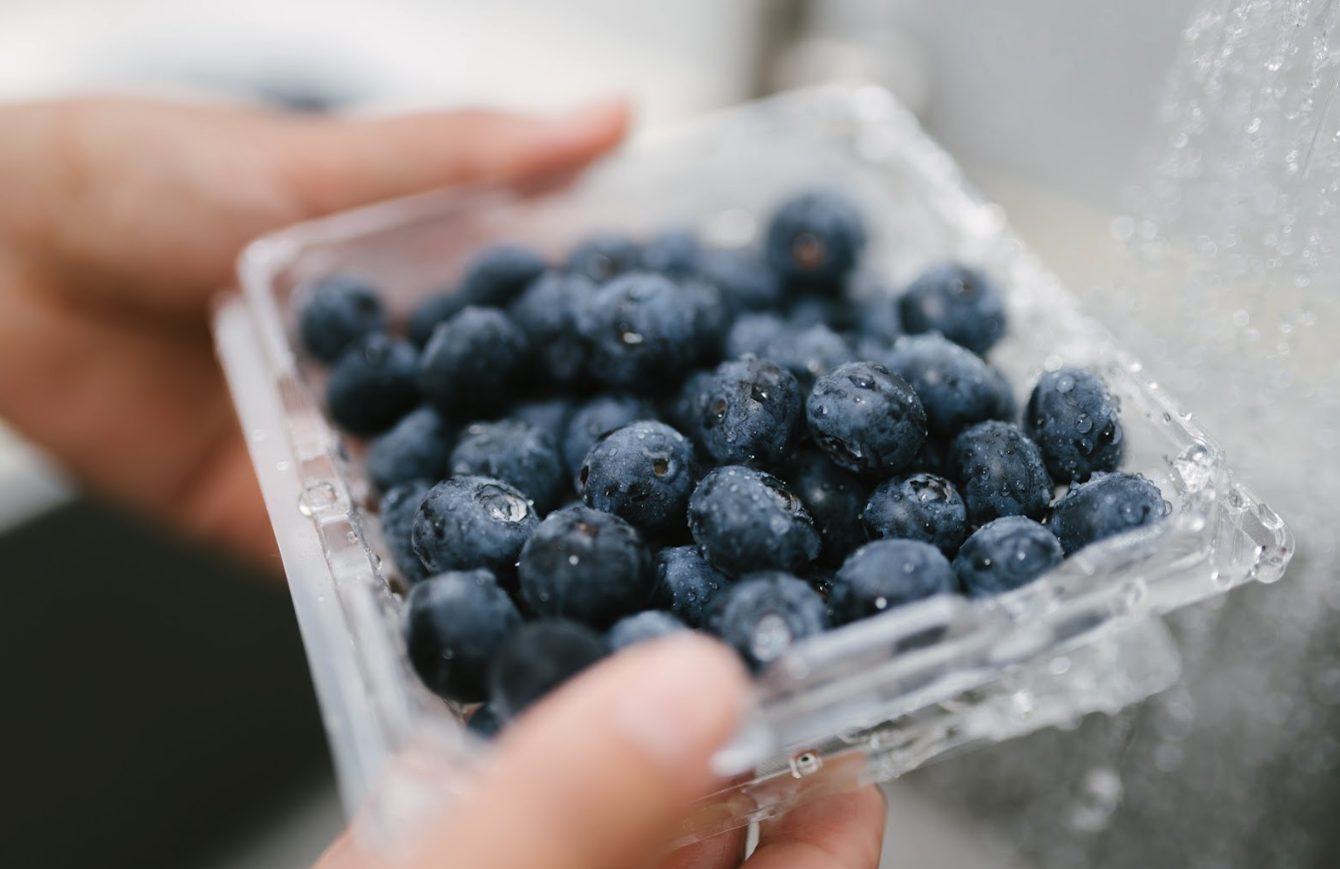
South Africa has officially approved market access for fresh blueberries from all U.S. states.
All facilities intending to ship to South Africa must register. This market will be added to the comprehensive facility registration form that the USHBC publishes every September for the following season. Exporters should watch for an email next month with facility registration details.
If you’re interested in shipping during the 2025 season, please contact NABC/USHBC Senior Director of Government Affairs and Public Policy Alyssa Houtby as soon as possible.
After years of stalled progress, we thank the current administration for prioritizing this request and opening the South Africa market for U.S. fresh blueberries. We’re grateful to the dedicated team at USDA’s Animal and Plant Health Inspection Service (APHIS) for their collaboration and for securing a science-based and practical work plan for blueberry growers and packers.
Although South Africa’s blueberry market has evolved significantly since the original access request, NABC and USHBC remain optimistic about the opportunities this market presents. We believe strongly in the importance of open, science-based trade, and will continue working to expand and strengthen global market access for U.S. blueberry growers.
To learn more about NABC’s market access efforts, contact Senior Director of Government Affairs and Public Policy Alyssa Houtby. For information on USHBC’s market development programs, contact Director of Global Business Development Haiying Zhang.
History of the Request for Access
This milestone was made possible through nearly a decade of collaboration among NABC, USHBC, the California Blueberry Commission, Oregon Blueberry Commission and Washington Blueberry Commission. We also thank Rufus Isaacs, Ph.D., of Michigan State University for his technical guidance on the operational work plan, and our partners at Bryant Christie Inc., whose support was instrumental in advancing this request.
Houtby Promoted to Sr. Director of Government Affairs, Public Policy
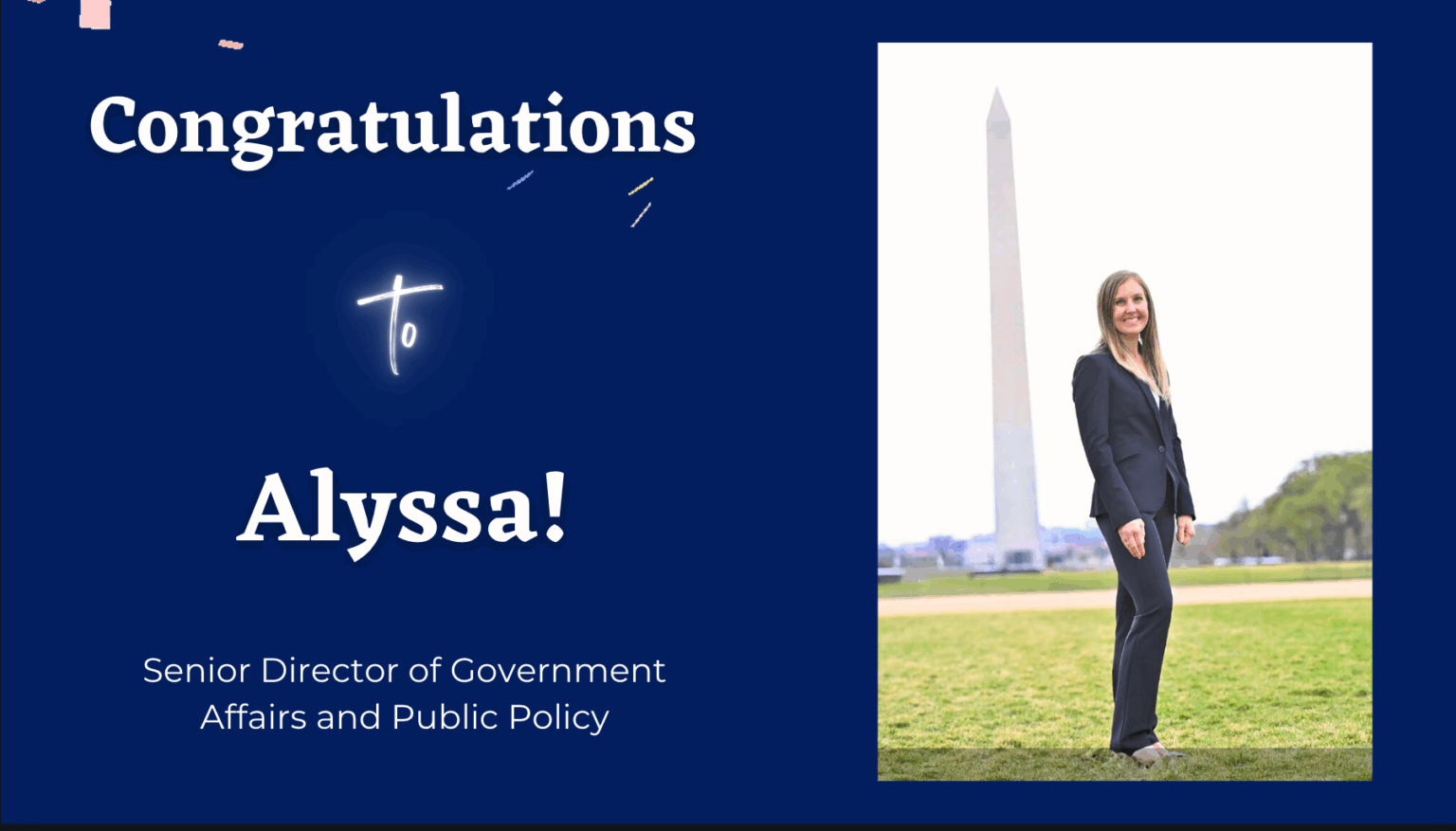
In recognition of her vision, leadership and tireless dedication to NABC and USHBC, Alyssa Houtby has been promoted to Senior Director of Government Affairs and Public Policy.
Alyssa joined the blueberry industry in 2023 as Director of Government Affairs and has dramatically elevated the relevance and influence of our work in Washington, D.C., while also building strong connections with our growers and industry stakeholders at the grassroots level.
In her new role, she’ll lead both NABC and USHBC into a new chapter of growth, success and visibility for blueberries on behalf of our growers and industry stakeholders.
Please join us in congratulating Alyssa!
There’s Still Time to Register for The Blueberry Convention, Oct. 8-10

The Blueberry Convention, October 8-10 in Seattle, is your one stop to see what’s next in blueberries – tech, trends, strategy and the people shaping it. Join keynote speakers, innovators and growers as they dig into what’s working now and what’s around the corner.
Here’s a taste of what’s on deck:
Rooted in Results – Advancing Soil Health and Irrigation Efficiency
Healthy soil and smart irrigation are the foundation for productive, high-quality blueberry crops. This session will showcase cutting-edge tools and research helping growers fine-tune irrigation strategies, monitor soil moisture and enhance overall plant health.
Data Collection and Application – From the Sky to the Ground
Explore how drones are transforming blueberry production from above. This session will highlight real-world applications of drone technology for data collection and crop treatment – from scouting and mapping to precision application tools.
From Farm to Future – Economic Forces Reshaping the Blueberry Market
Explore the powerful economic forces shaping the future of blueberry production, distribution and demand. Plus, we’ll celebrate the graduation of Class 3 of the Blueberry Industry Leadership Program and announce the winner of this year’s Blueberry Boost Accelerator in partnership with VentureFuel.
Insights to Action – Shaping USHBC’s Strategy
In this interactive session, The Directions Group will introduce the process and tools used to inform the next strategic plan for the USHBC, including approaches like wargaming and stakeholder-driven research. Your insights will help create a strategy that unites and impacts the entire blueberry community.
Breaking Barriers – Women Leaders in the Blueberry Industry
Join us for an inspiring conversation spotlighting the journeys of women who are shaping the future of the blueberry industry. From family farms to boardrooms, these leaders will share their personal stories of resilience, the challenges they’ve faced and the breakthroughs that helped them rise.
Insights from the Field – Automated Harvesting and the Future of Farm Labor
As labor availability continues to challenge the blueberry industry, growers are turning to automation to increase efficiency and reduce reliance on manual labor. Hear directly from growers across the country who are testing and adopting autonomous harvesting technologies.
Check out the full schedule to discover everything we have planned. Then register today!
Apply to be a USHBC Volunteer by Oct. 13
The call for volunteers for USHBC committees, subcommittees, advisory boards or task forces is now open!
Volunteering with USHBC is an excellent opportunity for those who are passionate about the future of the organization and want to support our vision to make blueberries the world’s favorite fruit! We’re seeking people of all backgrounds with varied industry experience to serve in a wide array of positions.
You can review all available vacancies on committees, advisory boards and task forces when you begin the application process. Every effort will be made to match an individual’s experience and interests to available positions, and to provide an opportunity to contribute to USHBC and the industry through meaningful work in order to grow professionally and build relationships within the industry.
There’s simply no better way to serve the blueberry industry, create new connections and make an impact! Take just a few minutes to apply by October 13! Appointments, made by the USHBC chair, will begin on January 1, 2025.
Reach out to Amanda Griffin, vice president of engagement and education, at [email protected] with questions.