Back to Newsroom
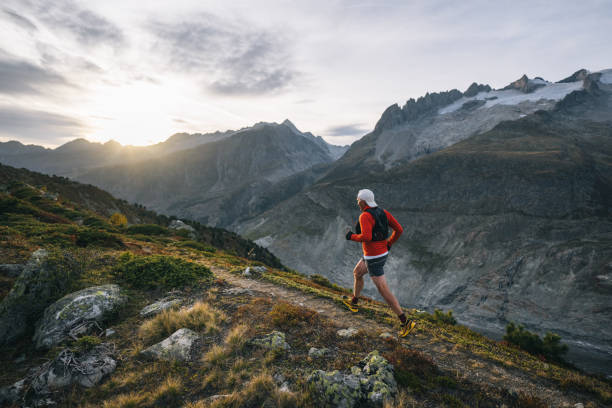
FOLSOM, CA., Aug. 27, 2026 – It’s well documented that demanding forms of endurance exercise, such as trail running, can cause prolonged muscle damage, inflammation and increased fatigue.[1] Trail running routes often include technical running and downhill sections, which can lead to a greater degree of oxidative stress and inflammation on the body, reducing performance and delaying recovery from long races. [2] [3] The good news is that simply managing the stress and inflammation that occurs after exercise may help reduce fatigue and support performance.
Berries, including blueberries, provide phytonutrients (including anthocyanins) that other types of commonly enjoyed fruit do not. Because blueberries are uniquely high in anthocyanins, they have garnered interest as a potential nutritional strategy to support prolonged endurance performance and recovery.[4]
Key Study Details
New research published in the International Journal of Sport, Nutrition & Exercise Metabolism evaluated how seven days of blueberry supplementation affected physiologic function, performance and post-race recovery following a 22.2 km trail run. Nine experienced recreational trail runners (four female, five male, average age 38.6 ± 9.4 years) participated in the randomized double-blind, placebo-controlled crossover study. After each runner completed a session to become familiar with the course, they completed the same 22.2 kilometer trail course on two separate occasions. Each session was separated by a minimum of 21 days. For seven days before one race, participants consumed 25 grams of freeze‑dried blueberry powder, equivalent to 142 grams of fresh blueberries per packet, ~1 cup.[5] Before the other race, runners consumed a placebo powder, matched for energy, taste and appearance.
During each race, runners were instructed to run as fast as possible. Heart rate and perceived effort were monitored throughout the run. Additional measurements related to muscle function, lung function, cardiovascular function and stress were taken before the race, immediately afterward and again 24 hours later.
Blueberry Supplementation Improves Trail Running
The results of the study found that the runners completed the race significantly faster after seven days of blueberry supplementation compared to the placebo. This improved running performance of 4.2% occurred without accompanying increases in perceived effort or physiological stress on the body. These results are consistent with a recent meta-analysis indicating that polyphenol-rich fruit intake supports endurance performance.[6]
“These findings suggest blueberry supplementation may be a practical approach to enhancing endurance performance during demanding activities such as trail running,” said Jason Brandenburg, MSc, Ph.D., director, School of Kinesiology, University of the Fraser Valley. “Importantly, blueberry supplementation improved running performance without increasing physiological or perceptual stress on the body. These findings suggest that incorporating blueberries into a pre-run meal or snack may be a practical dietary strategy to support exercise performance in trail runners.”
Future Research Directions
Future research, with a larger sample size, is needed to better understand the exact biological mechanisms underlying the potential performance benefits of blueberry supplementation.
The U.S.Highbush Blueberry Council (USHBC) had no role in study design, data collection, data analysis, data interpretation or writing of the study. For more information on blueberry nutrition research visit healthprofessionals.blueberry.org/research
# # #
About the U.S. Highbush Blueberry Council
Established in 2000, The U.S. Highbush Blueberry Council (USHBC) is a federal agriculture research and promotion program with independent oversight from the United States Department of Agriculture (USDA). USHBC represents blueberry growers and packers in North and South America who market their blueberries in the United States and overseas, and works to promote the growth and well-being of the entire blueberry industry. USHBC is committed to providing blueberries that are grown, harvested, packed and shipped in clean, safe environments. Learn more ushbc.blueberry.org.
[1] Viña, J et al. “Free radicals in exhaustive physical exercise: mechanism of production, and protection by antioxidants.” IUBMB life vol. 50,4-5 (2000): 271-7. doi:10.1080/713803729
[2] Mrakic-Sposta, Simona et al. “Effects of Mountain Ultra-Marathon Running on ROS Production and Oxidative Damage by Micro-Invasive Analytic Techniques.” PloS one vol. 10,11 e0141780. 5 Nov. 2015, doi:10.1371/journal.pone.0141780
[3] Tauler, Pedro et al. “Changes in salivary hormones, immunoglobulin A, and C-reactive protein in response to ultra-endurance exercises.” Applied physiology, nutrition, and metabolism = Physiologie appliquee, nutrition et metabolisme vol. 39,5 (2014): 560-5. doi:10.1139/apnm-2013-0466
[4] United States Department of Agriculture, Agricultural Research Service. “Flavonoids.” Methods and Application of Food Composition Laboratory, Beltsville Human Nutrition Research Center, https://www.ars.usda.gov/northeast-area/beltsville-md-bhnrc/beltsville-human-nutrition-research-center/methods-and-application-of-food-composition-laboratory/mafcl-site-pages/flavonoids/. Accessed 18 June 2026.
[5] U.S. Department of Agriculture, Agricultural Research Service, Beltsville Human Nutrition Research Center. FoodData Central: Blueberries, Raw — Nutrient Profile (FDC ID 2346411). FoodData Central, National Agricultural Library, https://fdc.nal.usda.gov/food-details/2346411/nutrients. Accessed 18 June 2026.
[6] ‘d’Unienville, N. M. A., Blake, H. T., Coates, A. M., Hill, A. M., Nelson, M. J., & Buckley, J. D. (2021). Effect of food sources of nitrate, polyphenols, L-arginine and L-citrulline on endurance exercise performance: a systematic review and meta-analysis of randomised controlled trials. Journal of the International Society of Sports Nutrition, 18(1), 76. https://doi.org/10.1186/s12970-021-00472-y
Link copied to clipboard